Personal Hand-held Systems (PDAs) & Smartphones
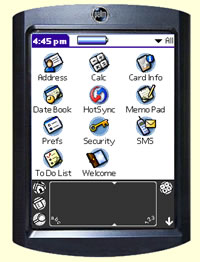
The use of personal handheld computers as exemplified by PDAs (personal digital assistants) and Smartphones has increased exponentially over the past few years, and health care has been one area where they are effectively taking hold. First initiated by physicians, health care professionals have now adopted PDAs and Smartphones as excellent tools for personal information “brush-ups”, scheduling, to-do lists, drug calculations, client data gathering and problem solving; and with the help of specialized programs, for a myriad of other professional activities. Hailed as far more practical than desktop PCs and less cumbersome than laptops or tablets, PDAs and Smartphones are fast becoming the most sophisticated and widely used technology of the 21st century thus far.
Objectives
|
 |