
Acid-base—"RAMS" (Respiratory Alternate, Metabolic Same)

Hallucinations (visual, tactile)
Increased vital signs and insomnia
Tremens → delirium tremens (potentially lethal)
Shakes/Sweats/Seizures/Stomach pains (nausea, vomiting)
Eating
Emotion
Exertion (Exercise)
Adolescent women/Amenorrhea
NGT alimentation (most severe cases)
Obsession with losing weight/becoming fat though underweight
Refusal to eat (2=5% die)
Electrolyte abnormalities (e.g., ↓ K+, cardiac arrhythmia)
↑eXercise
Intelligence often above average/Induced vomiting Cathartic use (and diuretic abuse)
Pain (RLQ)
Anorexia
Increased temperature, WBC (15,000-20,000)
Nausea
Signs (McBurney's, Psoas)
Pain
Pale
Pulseless
Paresthesia
Poikilofhermic
Paralysis
Symptom Implication
Cold and clammy... give hard candy.
Hot and dry... glucose is high.
Artery
Vein
Artery
Chemotherapy
Assess body image disturbance (related to alopecia)
Nutritional needs when N/V present
Comfort from pain
Effective response to Tx? (Evaluate)
Rest (for patient and family)
Use if under:
6 years old, or
60 pounds
Female
Fat
Forty
Fertile
Fair
Crying, minimize
Logan bow
Elbow restraints
Feed with Breck feeder
Tent, croup
Liquid (sterile water), rinse after feeding
Impaired feeding (no sucking)
Position—never on abdomen
Cognitive disorders: assessment of difficulties— "JOCAM"
Judgment
Orientation
Confabulation
Affect
Memory
Alcohol, acidosis (hyperglycemic coma)
Epilepsy (also electrolyte abnormality, endocrine problem)
Insulin (hypoglycemic shock)
Overdose (or poisoning)
Uremia and other renal problems
Trauma; temperature abnormalities (hypothermia, heat stroke)
Infection (e.g., meningitis)
Psychogenic ("hysterical coma")
Stroke or space-occupying lesions in the cranium
Sugar (hyperglycemia)
Salt (Hypernatremia)
Sex (excess androgens)
Diabetes: signs and symptoms—"three P's," "three poly's"
Polydipsia (very thirsty)
Polyphagia (very hungry)
Polyuria (urinary frequency)
Banana
Rice (cereal)
Applesauce
Toast/Tea
Cake
Cookies
Cream (dairy, e.g., milk, ice cream)
Power
Passageway
Passenger
Dystocia: general aspects (maternal)—"three P's"
Psych
Placenta
Position
Eardrops: administering—UP/DOWN
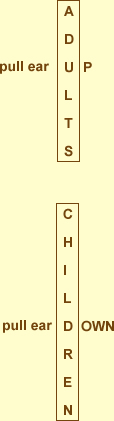
Redness
Edema
Ecchymosis
Discharge
Approximation of skin
Mydriatic = dilated pupils
Miotic = tiny (constricted)
Hemolysis
Elevated Liver enzymes
Low Platelet count
CHF (congestive heart failure)
CVA (cardiovascular accident)
CAD (coronary artery disease)
CRF (chronic renal failure)
Intake and output (urine)
Take blood pressure
Ischemia attack, transient (watch for TIAs)
Respiration, pulse
Electrolytes
Daily weight
Hypoglycemia: signs and symptoms—"DIRE"
Diaphoresis
Increased pulse
Restless
Extra hungry
Infections during pregnancy—"TORCH"
Toxoplasmosis
Other (hepatitis B, syphilis)
Rubella
Cytomegalovirus
Herpes simplex virus
Period (menstrual: late, spotting, bleeding)
Abdominal pain, dyspareunia
Infection (abnormal vaginal discharge)
Not feeling well, fever or chills
String missing
Cooperation
Compromise
Collaboration
RIGHT medication
RIGHT dosage
RIGHT route
RIGHT time
RIGHT patient
Regularity (provide routine and structure)
Reward (positive reinforcement)
Redundancy (repeat)
Newborn assessment components: "APGAR"
Appearance
Pulse
Grimace
Activity
Respiratory effort
Gravida
Term
Preterm
Abortions (SAB, TAB)
Living children
Abdominal pain (possible liver or gallbladder problem)
Chest pain or shortness of breath (possible pulmonary embolus)
Headache (possible hypertension, brain attack)
Eye problems (possible hypertension or vascular accident)
Severe leg pain (possible thromboembolic process)
Pain: assessment— "PQRST"
What Provokes the pain?
What is the Quality of the pain?
Does the pain Radiate?
What is the Severity of the pain?
What is the Timing of the pain?
Pain: management—"ABCs"
Ask about the pain
Believe when patients say they have pain
Choices—let patients know their choices
Deliver what you can, when you said you would
Empower/Enable patients' control over pain
Wind (pulmonary)
Wound
Water (urinary tract infection)
Walk (thrombophlebitis)
Preterm infant: anticipated problems—"TRIES"
Temperature regulation (poor)
Resistance to infections (poor)
Immature liver
Elimination problems (necrotizing enterocolitis [NEC])
Sensory-perceptual functions (retinopathy of prematurity [ROP])
Psychotropic medications: common antidepressives (tricyclics)— "VENT"
Vivactil
Elavil
Norpramin
Tofranil
Schizophrenia: primary symptoms—"fourA's"
Associative looseness
Affect
Ambivalence
Autism
Sprain: nursing care plan—"ICE"
Immobilize (and rest)
Cool (with ice)
Elevate
Stool assessment—"ACCT"
Amount
Color
Consistency
Timing
Tracheoesophageal fistula: assessment—"three C's"
Coughing
Choking
Cyanosis
Trapeze bar overhead to raise and lower upper body
Requires free-hanging weights; body alignment
Analgesia for pain, prn
Circulation (check color and pulse)
Temperature (check extremity)
Infection prevention
Output (monitor)
Nutrition (alteration related to immobility)
Transient ischemic attacks: assessment—"three T's"
Temporary unilateral visual impairment
Transient paralysis (one-sided)
Tinnitus —» vertigo
Trauma care: complications—"TRAUMA"
Thromboembolism/Tissue perfusion, altered
Respiration, altered
Anxiety related to pain and prognosis
Urinary elimination, altered
Mobility impaired
Alterations in sensory-perceptual functions and skin integrity (infections)
Confusion
Ophthalmoplegia
Ataxia
Thiamine is an important aspect of Tx
Retrograde amnesia (Recall of some old memories)
Anterograde amnesia (Ability to form new memories)
Confabulation
Korsakoff's psychosis