1. Milk group - important for calcium, protein of high biological value, and other vitamins and minerals.
    1. Pregnancy - three to four servings (four to five for adolescents).
    2. Lactation - four to five servings.
    3. Count as one serving - 1 cup milk; ½ cup undiluted evaporated milk; ¼ cup dry milk; ¼ cups cottage cheese; 2 cups low-fat cottage cheese; ½ oz cheddar or Swiss cheese; or ¼ cups ice cream.

  2. Meat, poultry, fish, dry beans, nuts, and eggs group-important for protein, iron, and many B vitamins.
    1. Pregnancy - three servings.
    2. Lactation - three servings.
    3. Count as one serving - ½ cup cooked dry beans, 1 egg, or 1½ tbsp peanut butter is equivalent to 1 oz meat; use peanut butter or nuts rarely to avoid excessive fat intake; limit eggs to reduce cholesterol intake; trim fat from meat, and remove skin from poultry.

  3. Vegetable and fruit group-vitamins and minerals (especially vitamins A and C) and roughage.
    1. Vegetables:
      1. Pregnancy - three to four servings.
      2. Lactation - three to five servings.
      3. Count as one serving - 1 cup raw leafy greens, ½ cup of others.
    2. Fruits:
      1. Pregnancy - two to four servings.
      2. Lactation-two to four servings.
      3. Count as one serving ½ medium grapefruit; 1 medium apple, banana, or orange; ¼ cup fruit juice.
    3. Good sources (vitamin C) - citrus, cantaloupe, mango, papaya, strawberries, broccoli, and green and red bell peppers.
    4. Fair sources (vitamin C) - tomatoes, honeydew melon, asparagus tips, raw cabbage, collards, kale, mustard greens, potatoes (white and sweet), spinach, and turnip greens.
    5. Good sources (vitamin A) - dark-green or deepyellow vegetables and a few fruits (apricots, broccoli, pumpkin, sweet potato, spinach, cantaloupe, carrots, and winter squash).
    6. Good sources of folic acid - dark-green foliagetype vegetables.

  4. Bread and cereal group - good for thiamine, iron, niacin, and other vitamins and minerals.
    1. Pregnancy - 6 to 11 servings.
    2. Lactation - 6 to 11 servings.
    3. Count as one serving - 1 slice bread, 1 oz readyto-eat cereal, ½-¼ cup cooked cereal, cornmeal, grits, macaroni, noodles, rice, or spaghetti.

  5. Note: use dark-green leafy and deep-yellow vegetables often; eat dry beans and peas often; count ½ cup cooked dry beans or peas as a serving of vegetables or 1 oz from meat group.


Nutrient Needs During Pregnancy

Nutrient Maternal Need Fetal Need Food Source

Protein

Maternal tissue growth: uterus, breasts, blood volume, storage

Rapid fetal growth

Milk and milk products; animal meats-muscle, organs; grains, legumes; eggs

Calories

Increased BMR

Primary energy source for growth of fetus

Carbohydrates: 4 kcal/g
Proteins: 4 kcal/g
Fats: 9 kcal/g

Minerals
Calcium (and phosphorus)

Increase in maternal Ca²⁺ metabolism

Skeleton and tooth formation

Milk and milk products, especially natural cheese*

Iron

Increase in RBC mass
Prevent anemia
Decrease infection risk

Liver storage (especially in third trimester)

Organ meats-liver, animal meat; egg yolk; whole or enriched grains; green leafy vegetables; nuts

Vitamin A

Tissue growth

Cell development-tissue and bone growth and tooth bud formation.

Butter, cream, fortified margarine; green and yellow vegetables.

Vitamin B

Coenzyme in many metabolic processes

Coenzyme in many metabolic processes

Animal meats, organ meats; milk and cheese; beans, peas, nuts; enriched

Folic Acid

Meet increased metabolic demands in pregnancy
Production of blood products

Meet increased metabolic demands, including production of cell nucleus material
Prevent neural tube defects

Liver; deep-green, leafy vegetables

Vitamin C

Tissue formation and integrity Increase iron absorption

Tissue formation and integrity

Citrus fruit, berries, melons; peppers; green, leafy vegetables; broccoli; potatoes

Vitamin D

Absorption of Ca²⁺, phosphorus

Mineralization of bone tissue and tooth buds

Fortified milk and margarine

Vitamin E

Tissue growth; cell wall integrity; RBC integrity

Tissue growth; cell integrity; RBC integrity

Widely distributed: meat, milk, eggs, grains, leafy vegetables, vegetable oils

*Natural cheese contains less lactose; therefore it is a good source for those with lactose intolerance. Tofu (soybean cake) also is high in calcium.

NUTRITIONAL NEEDS OF THE NEWBORN
  1. Calories-108 kcal/kg/day.

  2. Protein-2.2 g/kg/day (1 g protein = 1 oz milk).
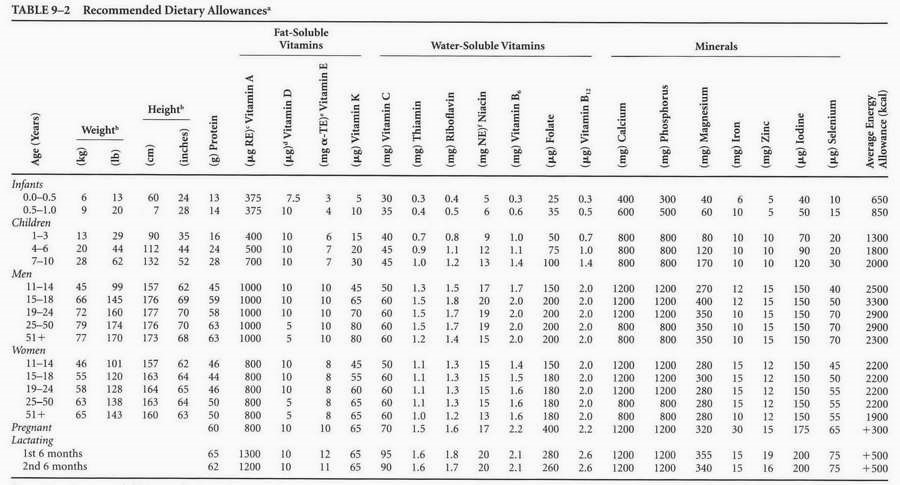
RECOMMENDED DIETARY ALLOWANCES: PEDIATRIC, ADULT, PREGNANCY, LACTATION


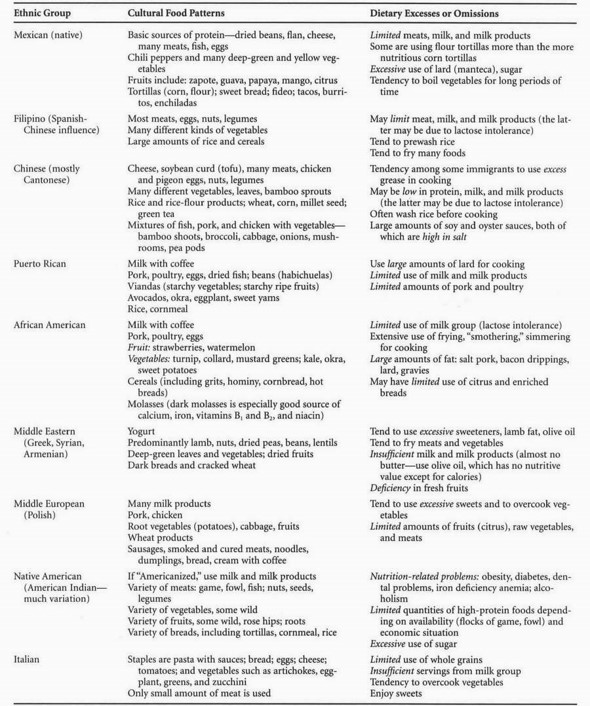
ETHNIC FOOD PATTERNS


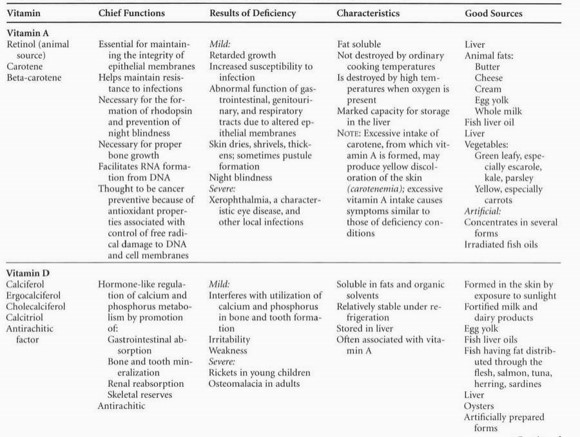
COMMON VITAMINS AND RELATED DEFICIENCIES
  1. Fluids - 3.5 oz/kg/day.

  2. Vitamin D-400 IU daily for bottle-fed babies after week 2.

  3. Fluoride - 0.25 mg daily up to 3 years old when local water supply has less than 0.3 ppm content.