TABLE 7-30 Comparison of Hemodialysis and Peritoneal Dialysis
| Hemodialysis | Peritoneal Dialysis | |
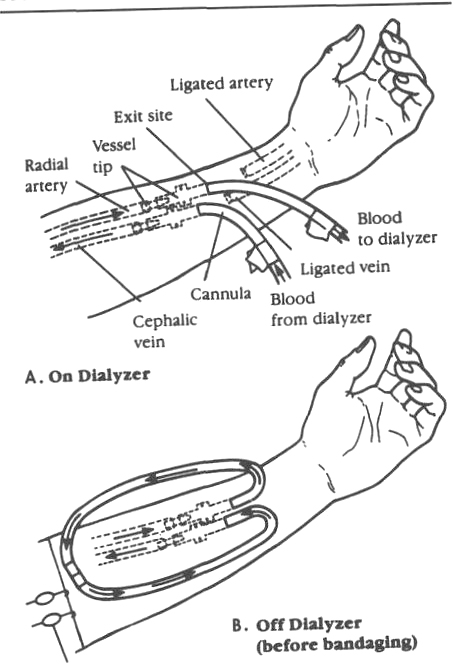
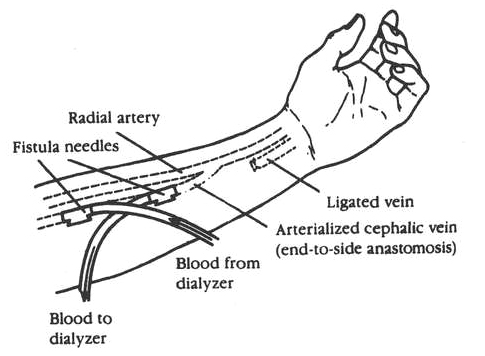
| Process | Rapid uses either external AV shunt (acute renal failure) or internal AV fistula (chronic renal failure); typical treatment is 3-4 hours, 3 days/week; also used for barbiturate overdoses to remove toxic agent quickly. | Intermittent - up to 36 hours for hospitalized patients; outpatients 4-8 hours, 5-6 times per week; dwell time 30-45 minutes for manual dialysis or 10-20 minutes for automatic cycler; either rigid stylet catheter orsurgically inserted soft catheter; advantage for patients who cannot tolerate rapid fluid and electrolyte changes. Continuous - two methods: (1) four cycles in 24 hours; dwell time is 4-5 hours during the day and 8-12 hours overnight; no need for machinery, electricity, or water source; surgically inserted soft catherter; closely resembles normal renal function; (2) automated cycler infuses and removes dialysate; generally done while patient sleeps; built-in alarms for patient safety. |
| Vascular access | Required | Not necessary; therefore suitable for patients with vascular problems |
| Heparinization | Required; systemic or regional | Little or no heparin necessary; therefore suitable for patients with bleeding problems |
| Complications (other than fluid and elctrolyte imbalances, which are common to all) | Dialysis dysequilibrium syndrome (preventable) Mechanical dysfunctions of dialyzer |
Peritonitis Hypoalbuminemia Bowel or bladder perforation Plugged or dislodged catheter |