-
Types of solutions:
- Hydrolyzed proteins (Hyprotein, Amigen).
- Synthetic amino acids (Freamine).
-
Usual components:
- 3-8% amino acid.
- 10-25% glucose.
- Multivitamins.
- Electrolytes.
- Fats (lipid or fat emulsions). Lipid emulsions are contraindicated if patient has allergy to eggs.
-
Supplements that can be added:
- Fructose.
- Alcohol.
- Minerals: iron, copper, calcium.
- Trace elements: iodine, zinc, magnesium, e. Vitamins: A, B, C.
- Androgen hormone therapy.
- Insulin.
- Heparin.
-
Administration:
- Dosage varies with clinical condition; 1 L q5-8h; rate of flow must be constant.
- Solution prepared under laminar flow hood (usually in pharmacy); solution must be refrigerated; when refrigerated, expires in 24 hours; once removed from refrigerator, expires in 12 hours.
- Incompatible with many antibiotics; check with pharmacy.
-
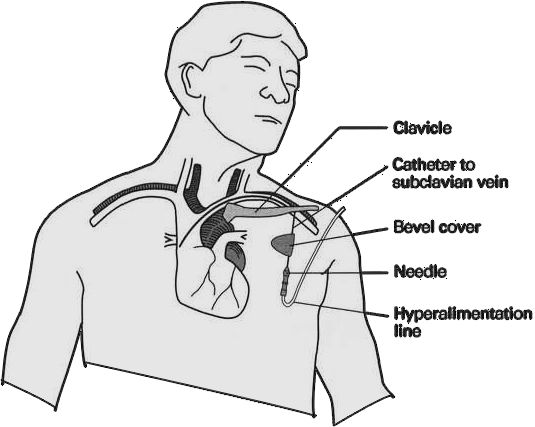
Route: catheter inserted in a large vein (subclavian) by physician; placement confirmed by x-ray before beginning infusion.
Hyperalimentation. Patient with subclavian hyperalimentation line.
-
Side effects:
- Hyperosmolar coma.
- Hyperglycemia >130 mg/dL.
- Septicemia.
- Thrombosis/sclerosis of vein.
- Air embolus.
- Pneumothorax.
- Prolonged use: >10 days, fat needed; intralipids piggybacked close to insertion site; do not give through filter; observe for hypersensitivity (tachypnea, tachycardia, nausea, urticaria).
-
Analysis/nursing diagnosis:
- Fluid volume excess, potential, related to inability to tolerate amount and consistency of solution.
- Fluid volume deficit related to state of malnutrition.
- Risk for injury related to possible complications.
- Altered nutrition, more or less than body requirements, related to ability to tolerate parenteral nutrition.
-
Nursing care plan/implementation:
-
Goal: prevent infection.
-
Dressing change:
- Strict aseptic technique.
- Nurse and patient wear mask during dressing change.
-
Cleanse skin with solution as ordered:
- Acetone to defat the skin, destroy the bacterial wall.
- Iodine 1% solution as antiseptic agent.
- Dressing changed q48-72h; transparent polyurethane dressings may be changed weekly.
- Mark with nurse’s initials, date and time of change.
- Air occlusive dressing.
- Attach final filter on tubing setup, to prevent air embolism.
- Solution: change ql2h to prevent infection.
- Culture wound and catheter tip if signs of infection appear.
- Monitor temperature q4h.
- Use lumen line for feeding only (not for CVP or medications).
-
Dressing change:
-
Goal: prevent fluid and electrolyte imbalance.
- Daily weights.
- I&O.
- Blood glucose q4h using glucometer; may need insulin coverage.
- Specific gravity q8h to determine hydration status; normal serum osmolality 275-295 mOsm, TPN 600-1400 mOsm.
- Infusion pump to maintain constant infusion rate.
-
Goal: prevent complications.
- Warm TPN solution to room temperature to prevent chills.
-
Monitor for signs of complications.
- Infiltration.
- Thrombophlebitis.
- Fever.
- Hyperglycemia.
- Fluid imbalance.
- Have patient perform Valsalva maneuver or apply a plastic-coated clamp when changing tubing to prevent air embolism.
- Tape tubings together to prevent accidental separation.
-
Goal: prevent infection.
-
Evaluation/outcome criteria:
- No signs of infection.
- Blood sugar <130 mg/dL.
- Specific gravity between 1.010 and 1.020.
- Wounds begin to heal.
- Weight: no further loss, begins to gain.