Alcohol dependence is a chronic disorder in which the individual is unable, for physical or psychological reasons or both, to refrain from frequent consumption of alcohol in quantities that produce intoxication and disrupt health and ability to perform daily functions.
-
Concepts and principles related to alcohol abuse and dependence:
-
Alcohol affects cerebral cortical functions:
-
Memory.
-
Judgment.
-
Reasoning.
-
Alcohol as a
depressant:
-
Relaxes the individual.
-
Lessens use of repression of unconscious conflict.
-
Releases inhibitions, hostility, and primitive drives.
-
Drinking represents a tension-reducing device and a relief from feelings of insecurity. Strength of drinking habit equals degree of anxiety and frustration intolerance.
-
Alcohol abuse and dependence is a
symptom
rather than a disease.
-
Underlying fear and anxiety, associated with inner conflict, motivate the alcoholic to drink.
-
Alcoholics can
never
be cured to drink normally; cure is to be a “sober alcoholic,” with total abstinence.
-
The spouse of the alcoholic often unconsciously contributes to the drinking behavior because of own emotional needs
(co-alcoholic
or
co-dependent).
-
Intoxication occurs with a blood-alcohol level of 0.08% or above.
Signs of intoxication
are:
-
Incoordination.
-
Slurred speech.
-
Dulled perception.
-
Tolerance occurs with alcohol dependence. Increasing amounts of alcohol must be consumed to obtain the desired effect.
-
Assessment:
-
Vicious cycle
- (a) low tolerance for coping with frustration; tension,
guilt
and shame, resentment; (b) uses alcohol for relief; (c) new problems created by drinking; (d) new anxieties; and (e) more drinking.
-
Coping mechanisms used:
denial, rationalization, projection.
-
Complications of abuse and dependence.
-
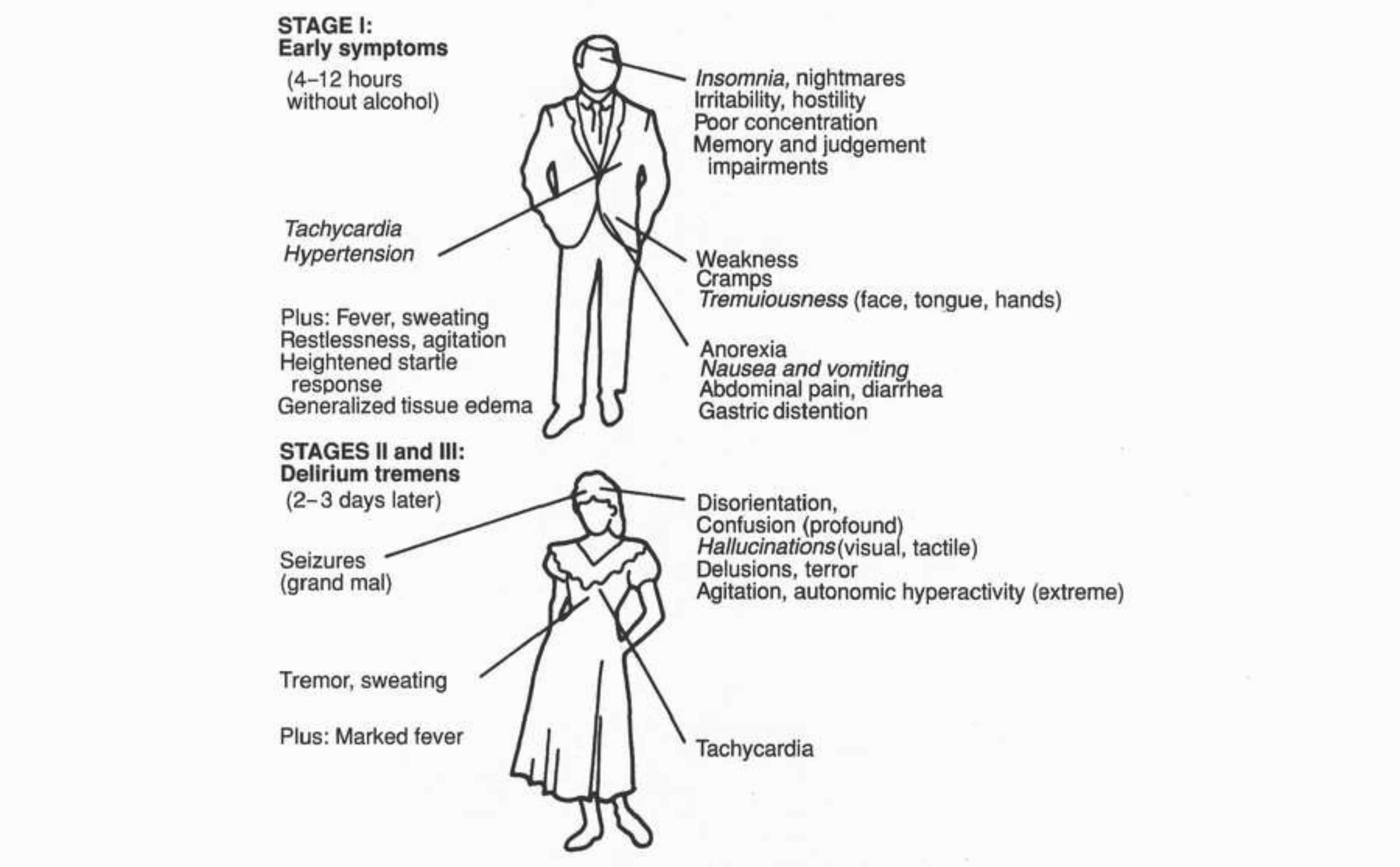
Alcohol withdrawal delirium (delirium tremens [DTs])
-result of nutritional deficiencies and toxins; requires sedation and constant watchfulness against unintentional suicide and convulsions.
-
Impending
signs relate to
CNS -
marked nervousness and restlessness, increased irritability; gross tremors of hands, face, lips; weakness; also
cardiovascular
- increased blood pressure, tachycardia, diaphoresis, dysrhythmias;
depression; gastrointestinal
- nausea, vomiting, anorexia.
-
Actual - serious
symptoms of mental confusion, convulsions, hallucinations (visual, olfactory, auditory, tactile). Without treatment,
15-25%
may die due to cardiac dysrhythmias, respiratory arrest, severe dehydration, massive infection.
-
Wernicke’s syndrome
- a neurological disturbance manifested by confusion, ataxia, eye movement abnormalities, and memory impairment. Other problems include:
-
Disturbed vision (diplopia).
-
Wandering mind.
-
Stupor and coma.
-
Alcohol amnestic syndrome (Korsakoff’s syndrome) -
degenerative neuritis due to
thiamine
deficiency.
-
Impaired thoughts.
-
Confusion, loss of sense of time and place.
-
Use of confabulation to fill in severe recent memory loss.
-
Follows episode of
Wernicke’s encephalopathy.
-
Polyneuropathy -
weak, irregular, rapid peripheral pulses; sensory and motor nerve endings are involved, causing pain, itching, and loss of limb control.
-
Related concerns - chronic heart failure (generalized tissue edema),
gastritis, esophageal varices, cirrhosis, pancreatitis, diabetes,
pneumonia, REM sleep deprivation,
malnutrition.
-
Diagnostic tests
-
Blood tests:
-
CBC: decreased
Hgb/Hct to detect irondeficiency anemia or acute/chronic GI bleeding;
increased
WBC (infection);
decreased
WBC (if immunosuppressed).
-
Glucose:
hyperglycemia/hypoglycemia may be present (pancreatitis, malnutrition, or depletion of liver glycogen stores).
-
Electrolytes: decreased
potassium and magnesium.
-
Liver function tests: increased
CPK, LDH, AST, ALT, and amylase (liver or pancreatic problem).
-
Nutritional tests: decreased
albumin and total protein;
decreased
vitamins (malnutrition/malabsorption).
-
Urinalysis:
infection; ketones due to breakdown of fatty acids in malnutrition (pseudodiabetic condition).
-
Chest x-ray:
rule out right lower lobe pneumonia (related to malnutrition, depressed immune system, aspiration).
-
ECG:
dysrhythmias, cardiomyopathies, or ischemia due to direct effect of alcohol on the cardiac muscle or conduction system, as well as effects of electrolyte imbalance.
-
Other screening studies
(e.g., hepatitis, HIV, TB): dependent on general condition, individual risk factors, and care setting.I
Symptoms associated with
alcohol withdrawal.
-
Analysis/nursing diagnosis:
-
Risk for injury (self-directed violence):
tendency for self-destructive acts related to intake of mindaltering substances and chronic low self-esteem.
-
Altered nutrition, less than body requirements, related to a lack of interest in food, interference with absorption/metabolism of
nutrients and amino acids.
-
Ineffective individual coping: denial/defensive coping related to tendency to be domineering and critical, with difficulties in interpersonal
relationships.
-
Conflict with social order related to extreme
dependence coupled with resentment of authority.
-
Spiritual distress or general dissatisfaction
with life related to feelings of powerlessness, low frustration tolerance, and demand for
immediate need satisfaction.
-
Dysfunctional behaviors/sexual dysfunction related to
tendency for excess in
work, sex, recreation, marked narcissistic behavior.
-
Social isolation related to use of coping
mechanisms that are primarily escapist.
-
Knowledge deficit (learning need) regarding
condition, prognosis, treatment, self-care, discharge needs.
-
Nursing care plan/implementation:
-
Detoxification phase - maintain physiological
stability.
-
Administer adequate sedation to
control anxiety, insomnia, agitation, tremors.
-
Administer anticonvulsants to
prevent withdrawal seizures (Valium, Librium, phenobarbital, magnesium sulfate).
-
Control nausea and vomiting to
avoid massive GI bleeding or rupture of esophageal varices (antiemetics, antacids).
-
Assess for hypertension, tachycardia,
increased temperature, Kussmaul’s respirations.
-
Assess fluid and electrolyte balance for dehydration (may need IV fluids) or overhydration (may need a
diuretic).
-
Reestablish proper nutrition: high protein (as long as
no severe liver damage), carbohydrate, thiamine, vitamins B complex and C.
-
Promote patient safety - provide quiet, calm, safe
environment: bed rest with rails, and head
of bed elevated; well-lit room to
reduce illusions; constant supervision and reassurance about fears and hallucinations, assess depression for
suicide potential.
-
Recovery-rehabilitation phase:
encourage participation in group activities; avoid
sympathy when client tends to rationalize behavior and seeks special
privileges - use acceptance and a nonjudgmental, consistent, firm, but kind
approach; avoid
scorn, contempt, and moralizing or punitive and rejecting behaviors; do not reinforce feelings of worthlessness,
self-contempt, hopelessness, or low self-esteem.
-
Problem behaviors:
-
Manipulative - be firm and consistent;
avoid “bid for
sympathy.”
-
Demanding - set limits.
-
Acting out - set limits, enforce rules and
regulations, strengthen impulse control and ability to delay gratification.
-
Dependency - place responsibility on client;
avoid giving
advice.
-
Superficiality - help client make realistic
selfappraisals and expectations in lieu of grandiose promises and trite verbalizations; encourage
formation of lasting interpersonal relationships.
-
Common reactions among staff:
-
Disappointment - instead, set
realistic goals, take one step at a time.
-
Moral judgment - instead,
support each other.
-
Hostility - instead, offer
support to each other when feeling frustrated from lack of results.
-
Refer client from hospital to
community resources for
follow-up treatment with social, economic, and psychological problems, as well as to self-help
groups, to reduce “revolving door” situation in which client comes in, is treated, goes out, and
comes in again the next night.
-
Alcoholics Anonymous (AA) - a self-help group
of addicted drinkers who confront, instruct, and support fellow drinkers in their efforts to stay
sober 1 day at a time through fellowship and acceptance.
-
Alanon - support group for families of alcoholics.
Alateen - support group
for teenagers when
parent is alcoholic.
-
Aversion therapy - client is subjected to
revulsion-producing or pain-inducing stimuli at the same time he or she takes a drink, to establish
alcohol rejection behavior. Most common is disulfiram (Antabuse), a drug that produces intense
headache, severe flushing, extreme nausea, vomiting, palpitations, hypotension, dyspnea, and blurred
vision when alcohol is consumed while person is taking this drug.
-
Group psychotherapy - the goals of group
psychotherapy are for the client to give up alcohol as a tension reliever, identify cause of stress,
build different means for coping with stress, and accept drinking as a serious symptom.
-
Health teaching: teach improved coping patterns to
tolerate increased stress; teach substitute tension-reducing strategies; prepare in advance for difficult,
painful events; teach how to reduce irritating or frustrating environmental stress.
-
Evaluation/outcome criteria:
complications prevented, resolved; everyday living patterns are restructured for a satisfactory life without
alcohol; demonstrates feelings of increased self-worth, confidence, and reliance.
-
Critical Pathway: Alcohol
Withdrawal Program