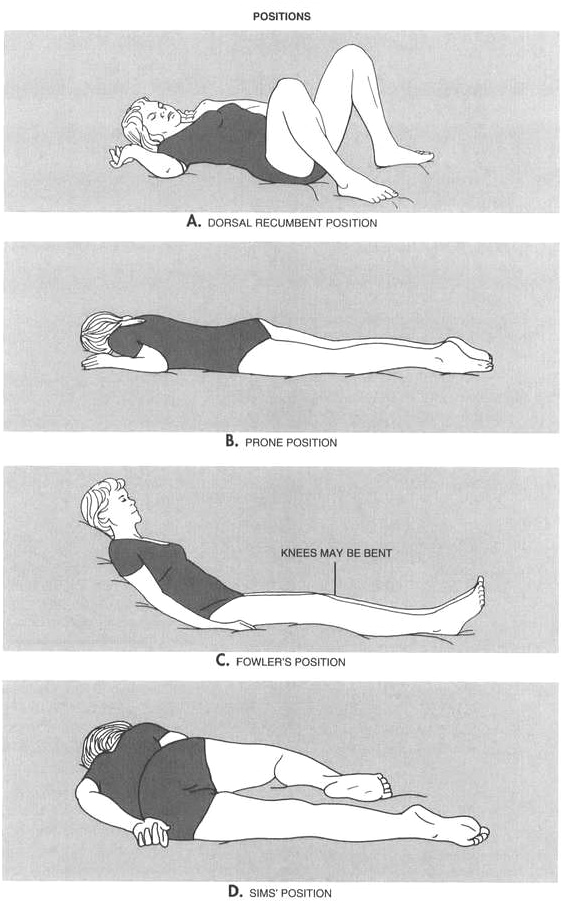
Common patient positions. (A)
Dorsal recumbent (back-lying), legs up - used in gynecological and obstetrical procedures such as forcep delivery or vaginal exam; legs down for comfort and following spinal anesthesia. (B)
Prone - may be used in unconscious patients to promote drainage from mouth and prevent flexion contractures. (C)
Fowler’s - semi-sitting; 45-60 degrees; knees may or may not be bent. Facilitates breathing and drainage. (D)
Sims’- position of choice for enemas and rectal examination, prevents aspiration in unconscious patients, comfortable sleeping position for pregnant woman.