- Definition: forcible perpetration of an act of sexual intercourse on the body of an unwilling person.
- Assessment:
- Signs of physical trauma - physical findings of entry.
- Symptoms of physical trauma - verbatim statements regarding type of sexual attack.
- Signs of emotional trauma - tears, hyperventilation, extreme anxiety, withdrawal, selfblame, anger, embarrassment, fears, sleeping and eating disturbances, desire for revenge.
- Symptoms of emotional trauma - statements regarding method of force used and threats made.
- Analysis/nursing diagnosis: rape-trauma syndrome related to phases of response to rape:
- Acute response: volatility, disorganization, disbelief, shock, incoherence, agitated motor activity, nightmares, guilt (should have been able to protect self), phobias (crowds, being alone, sex).
- Outward coping: denial and suppression of anxiety and fear (silent rape syndrome), feelings appear controlled.
- Integration and resolution: confronts anger with attacker; realistic perspective.
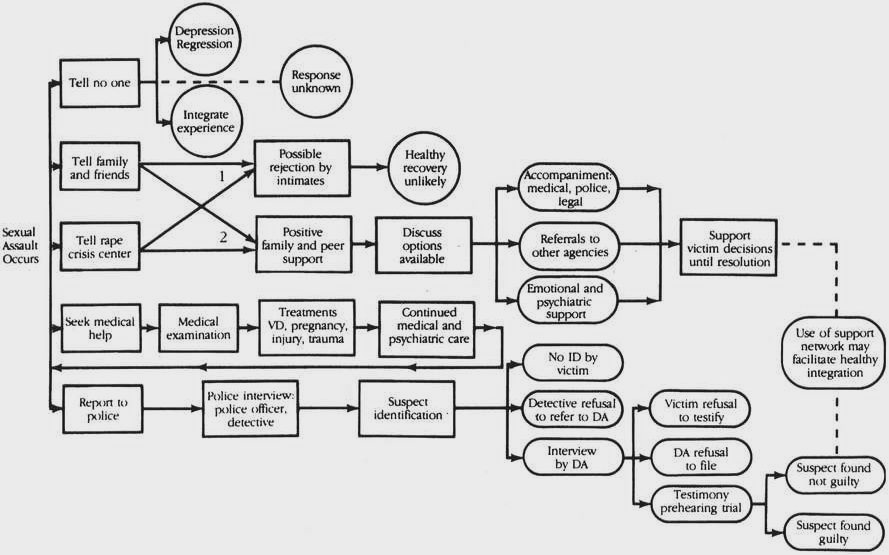
- Nursing care plan/implementation in counseling rape victims. Figure below is a summary of self-care decisions a victim faces the first night following a sexual assault.
- Overall goals:
- Acknowledge feelings.
- Face feelings.
- Resolve feelings.
- Maintain and restore self-respect, dignity, integrity, and self-determination.
- Work through issues:
- Handle legal matters and police contacts
- b. Clarify facts.
- Get medical attention if needed.
- Notify family and friends.
- Understand emotional reaction.
- Attend to practical concerns.
- Evaluate need for psychiatric consultations.
- Acute phase:
- Decrease victim’s stress, anxiety, fear.
- Seek medical care.
- Increase self-confidence and self-esteem.
- Identify and accept feelings and needs (to be in control, cared about, to achieve).
- Reorient perceptions, feelings, and statements about self.
- Help resume normal lifestyle.
- Outward coping phase:
- Remain available and supportive.
- Reflect words, feelings, and thoughts.
- Explore real problems.
- Explore alternatives regarding contraception, legal issues.
- Evaluate response of family and friends to victim and rape.
- Integration and resolution phase:
- Assist exploration of feelings (anger) regarding attacker.
- Explore feelings (guilt and shame) regarding self.
- Assist in making own decisions regarding health care.
- Maintain confidentiality and neutrality - facilitate person’s own decision.
- Search for alternatives to giving advice.
- Health teaching:
- Explain procedures and services to victim.
- Counsel to avoid isolated areas and being helpful to strangers.
- Counsel where and how to resist attack (scream, run unless assailant has weapon).
- Teach what to do if pregnancy or STD is outcome.
- Evaluation/outcome criteria: little or no evidence of possible long-term effects of rape (guilt, shame, phobias, denial).
|
Victim decisions following a sexual assault. (From the Rape Crisis Services of the YWCA, Greater Harrisburg, Pa.) |
 |