|
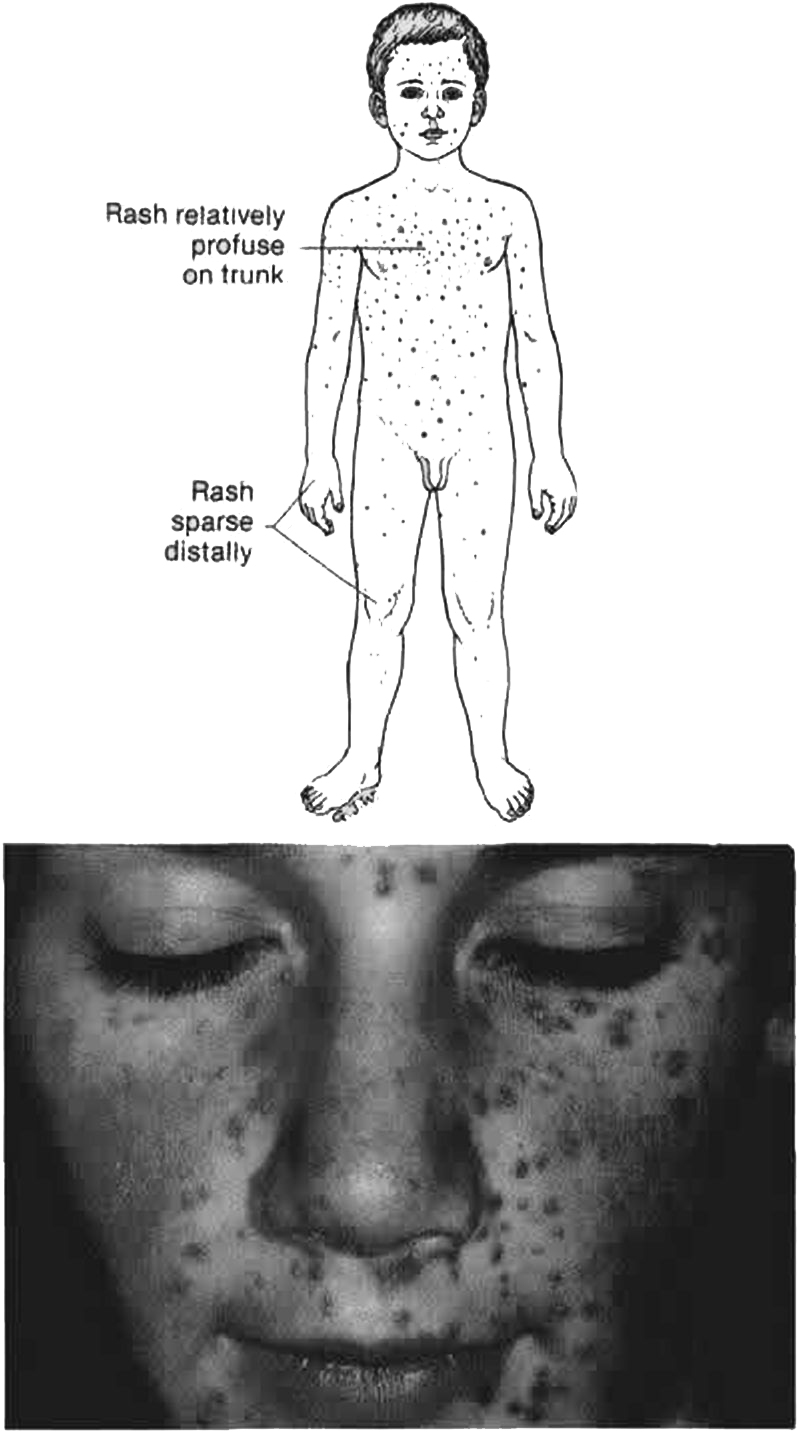
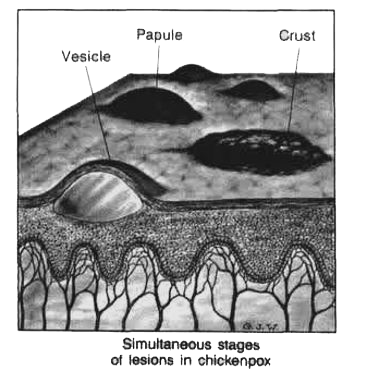
Prodromal stage: Slight fever, malaise, and anorexia for first 24 hours; rash highly pruritic; begins as macule, rapidly progresses to papule and then vesicle (surrounded by erythematous base, becomes umbilicated and cloudy, breaks easily and forms crusts); all three stages (papule, vesicle, crust) present in varying degrees at one time.
Distribution: Centripetal, spreading to face and proximal extremities but sparse on distal limbs and less on areas not exposed to heat (from clothing or sun)
Constitutional signs and symptoms: Elevated temperature from lymphadenopathy, irritability from pruritus
|
Specific: Antiviral agent acyclovir (Zovirax), varicella-zoster immune globulin (VZIG) after exposure in high-risk children
Supportive: Diphenhydramine hydrochloride or antihistamines to relieve itching; skin care to prevent secondary bacterial infection
Complications:Secondary bacterial infections (abscesses, cellulitis, pneumonia, sepsis)
Encephalitis
Varicella pneumonia
Hemorrhagic varicella (tiny hemorrhages in vesicles and numerous petechiae in skin)
Chronic or transient thrombocytopenia
|
Maintain strict isolation in hospital isolate child in home until vesicles have dried (usually 1 week after onset of disease), and isolate high-risk children from infected children
Administer skin care: give bath and change clothes and linens daily; administer topical calamine lotion; keep child’s fingernails short and clean; apply mittens if child scratches
Keep child cool (may decrease number of lesions)
Lessen pruritus; keep child occupied
Remove loose crusts that rub and irritate skin Teach child to apply pressure to pruritic area rather than scratch it
If older child, reason with child regarding danger of scar formation from scratching
Avoid use of aspirin; use of acetaminophen controversial
|